

A €300 home battery from Lidl. What's the catch?
New types of home energy products are entering the public consciousness more and more these days. Plug-in solar is getting a lot of press, but batteries are often overlooked.
I realise that I live in a bubble though, and all these things are still far from mainstream. Adoption of technologies like solar panels and heat pumps is increasing, but the numbers are relatively tiny. Only around 5% of homes have solar panels¹, and it’s more like 1% for heat pumps².
Having said that, we’ve definitely moved on from the very early adopters who only installed solar panels for virtuous or environmental reasons. Increasingly, “green tech” is recognised as a way to save money on energy bills.
Plug-in solar vs plug-in batteries
I’ve written before about how new regulations on plug-in solar are also opening up opportunities for new types of batteries. Solar panels and batteries are obviously very different things though.
One key difference between them is that everyone intuitively understands solar panels. You get them installed and they start giving you “free” electricity. If you can afford the up-front cost, you’ll hopefully break even at some point and then start profiting from your investment.
It’s less obvious what a battery does for you and how it can save you money. Until now, home batteries have played second fiddle to solar panels. You only get batteries to store your excess solar generation.
But a battery can be the star of the show.
A stand-alone battery
The whole premise of Windfall Energy is that we wanted to enable people to save money and use more clean energy without the need for solar panels. A smart, stand-alone battery, coupled with a time-of-use tariff, can monitor the grid for price signals and always charge up with the cheapest energy available. It then gives that energy back to your home during the peak hours so you don’t have to pay for the most expensive electricity.
We’re going to see more and more of these types of batteries over the coming years. The simplicity of being able to just plug them into a regular socket in the home means that tens of millions of homes in the UK can now access money-saving devices like these.
Lidl’s Tronic battery
So in this changing landscape, a €300 home battery from Lidl sounds like a pretty interesting proposition. But we need to dig a little deeper.
Firstly, the headline price is a bit artificial. It’s a limited-time offer only available for Lidl Plus app users in Germany. Having said that, this is still a cheap battery and a regular price of €400 is great value.
This is the image doing the rounds. Not exactly Dieter Rams, but an inoffensive neat white box.
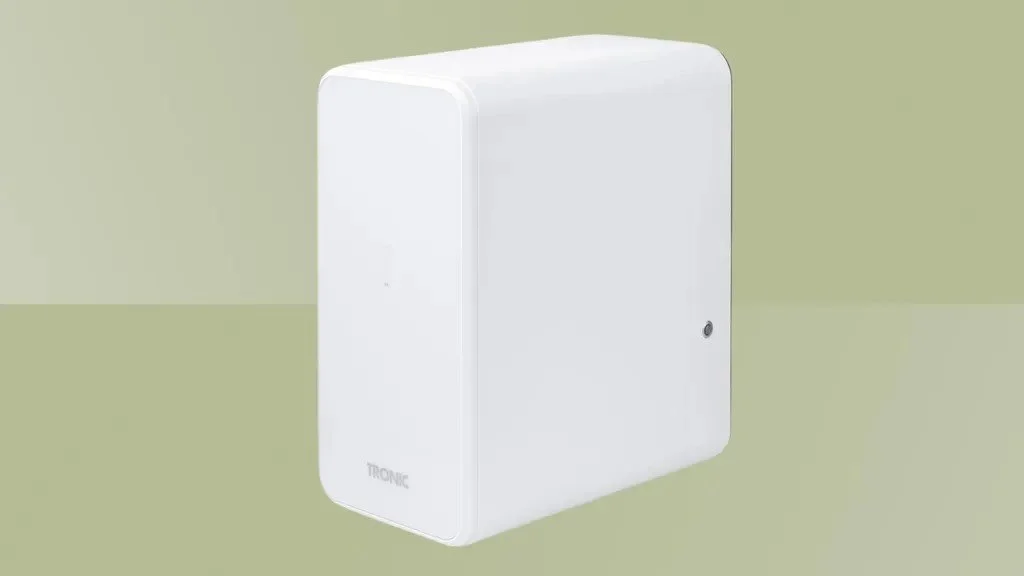
Image: Lidl
In a very literal sense of the term white-labelled, under the hood it’s a Marstek B2500 battery. Seems like a reasonable decision by Lidl not to try and develop their own hardware from scratch.
The catch
So it looks OK, and it’s pretty cheap, but the most important thing to understand is that on its own it doesn’t really do anything.
The Lidl battery is being launched in Germany where balcony solar has been a thing for a few years, so it’s designed as an add-on to such a solar setup. It assumes you already have solar panels and also an inverter.
The job of an inverter is to convert the DC power generated by a solar panel, or stored in a battery, into the AC power that your home uses. To “plug in” to the home you need an inverter as part of the system.
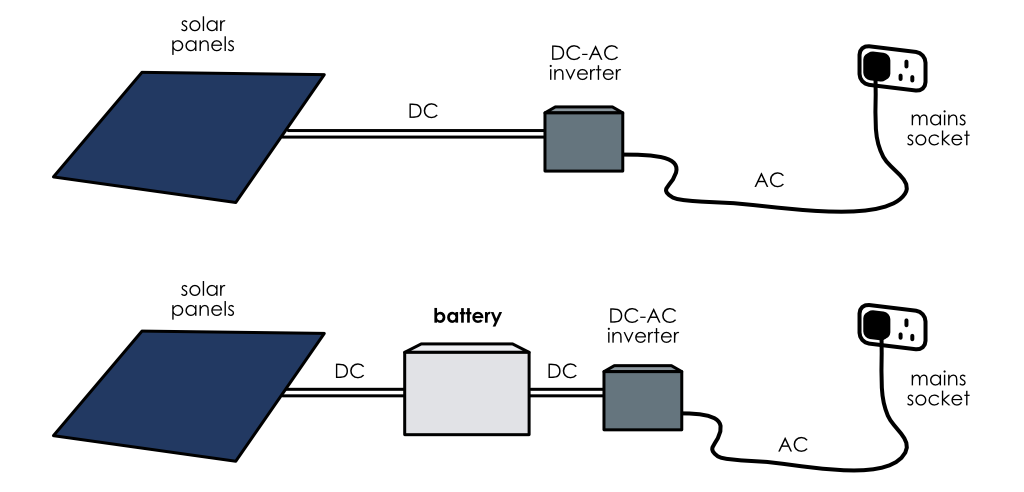
Diagram showing how you need an inverter to get the power into your home
As we can see above, a battery can sit between a solar panel and the home. Without it, if you have solar panels it’s a case of use it or lose it. With a battery, if you’re not using the power generated by your solar panels in the middle of the day, you can store it for later.
So this is the context for a small home battery like the new one from Lidl. It’s only useful if you pair it with an inverter.
In practice, a plug-in balcony solar installation using a Lidl battery will look something like this.
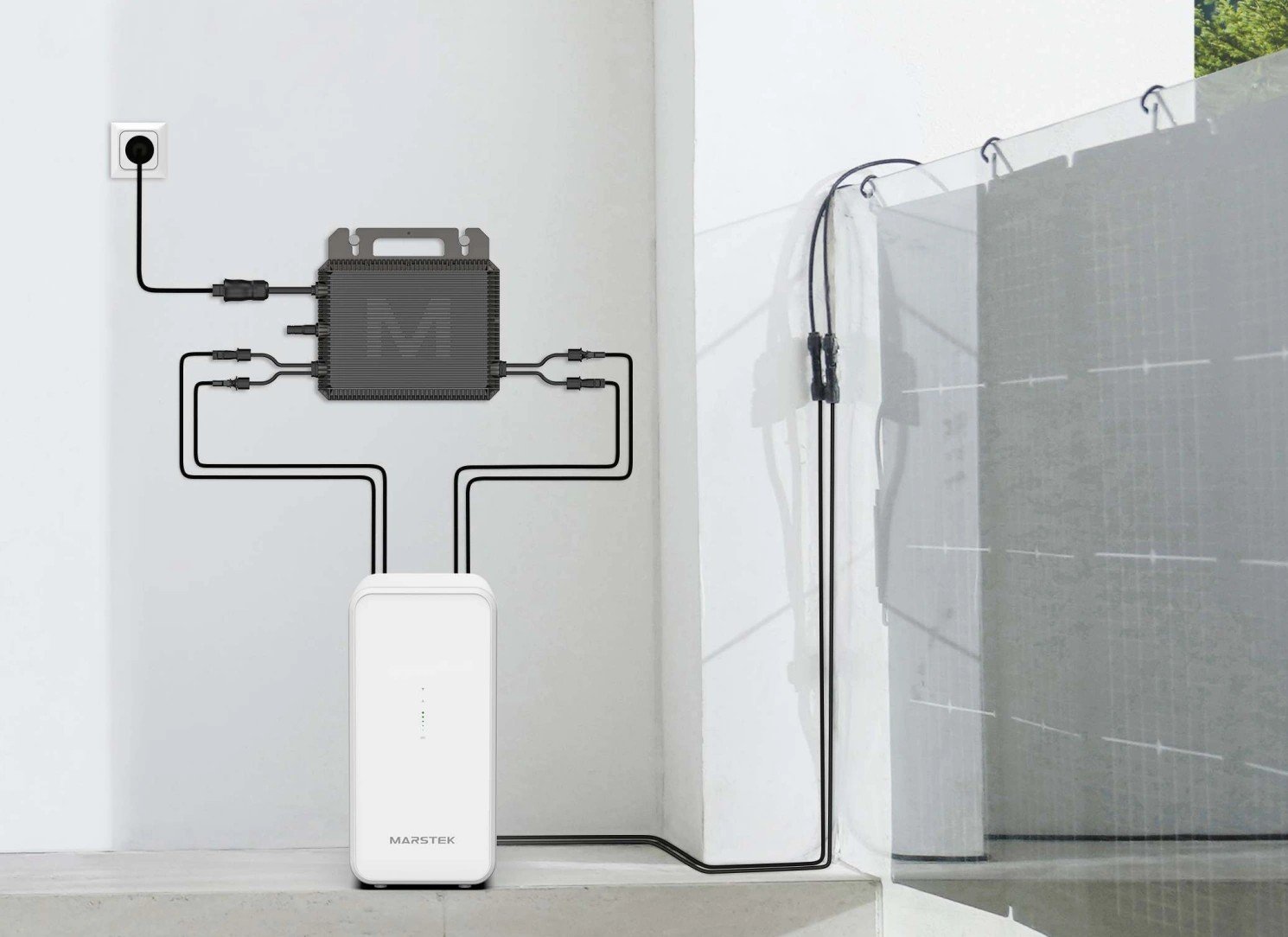
Image: Plug In Solar Explained
If you want to read a more detailed review of the new Lidl battery, the guys at Plug In Solar Explained have written a great piece on it.
As they summarise it, getting the Lidl battery working is “No single-box install: you're sourcing the battery, the microinverter, and the meter separately, getting them talking to each other, and supporting the chain yourself if any link in it sulks.”
This is an imperfect analogy, but it’s a bit like buying a specialised battery for a camera, only to realise it doesn’t include the camera itself, or the charger.
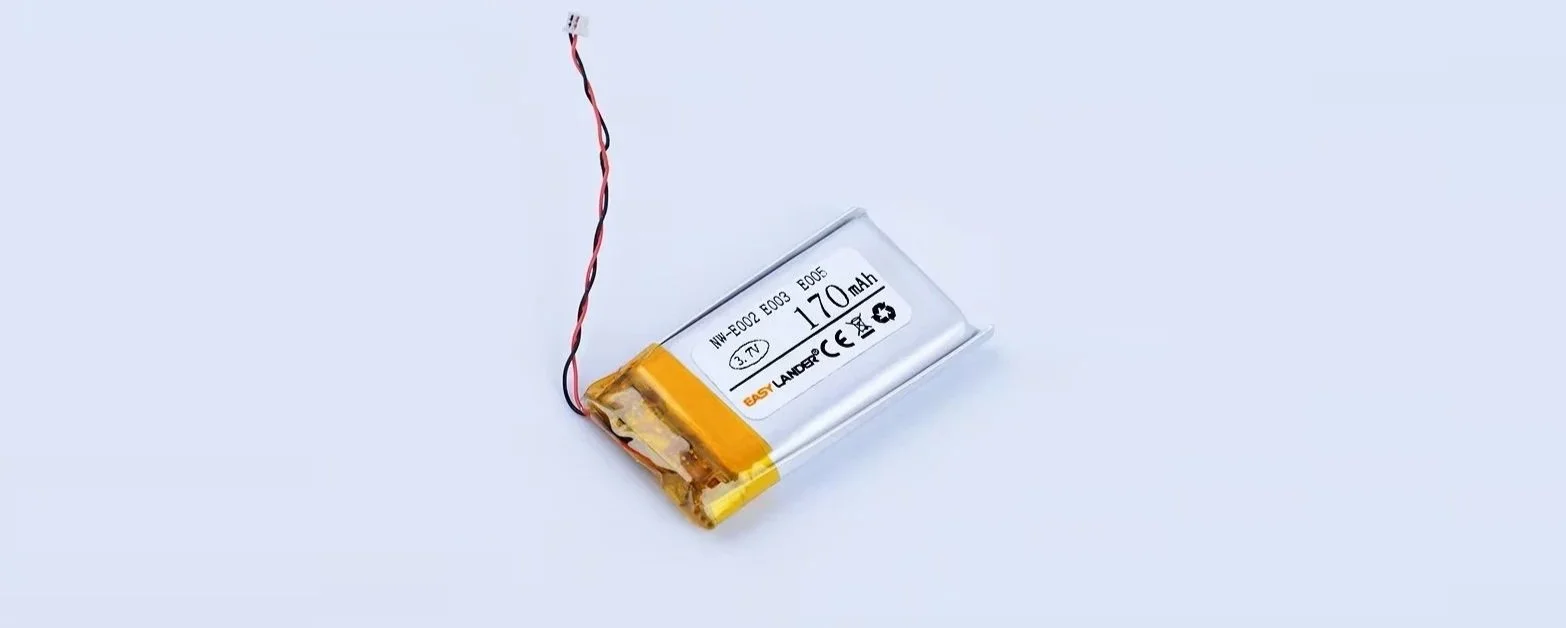
Just a battery
A battery in every home
This battery is a sign of things to come. Until now, home energy tech has been limited to those who own their home and can afford to invest many thousands of pounds into permanent modifications to it.
The Lidl battery is part of the new wave of plug-in energy products coming to the UK enabled by changes to regulations. These products are massively reducing the barriers to adoption, and are opening up money-saving tech for the 95% of people who’ve been left behind thus far.
Our Windfall Battery is also part of this revolution in residential cleantech, but it has some key differences to the Lidl battery.
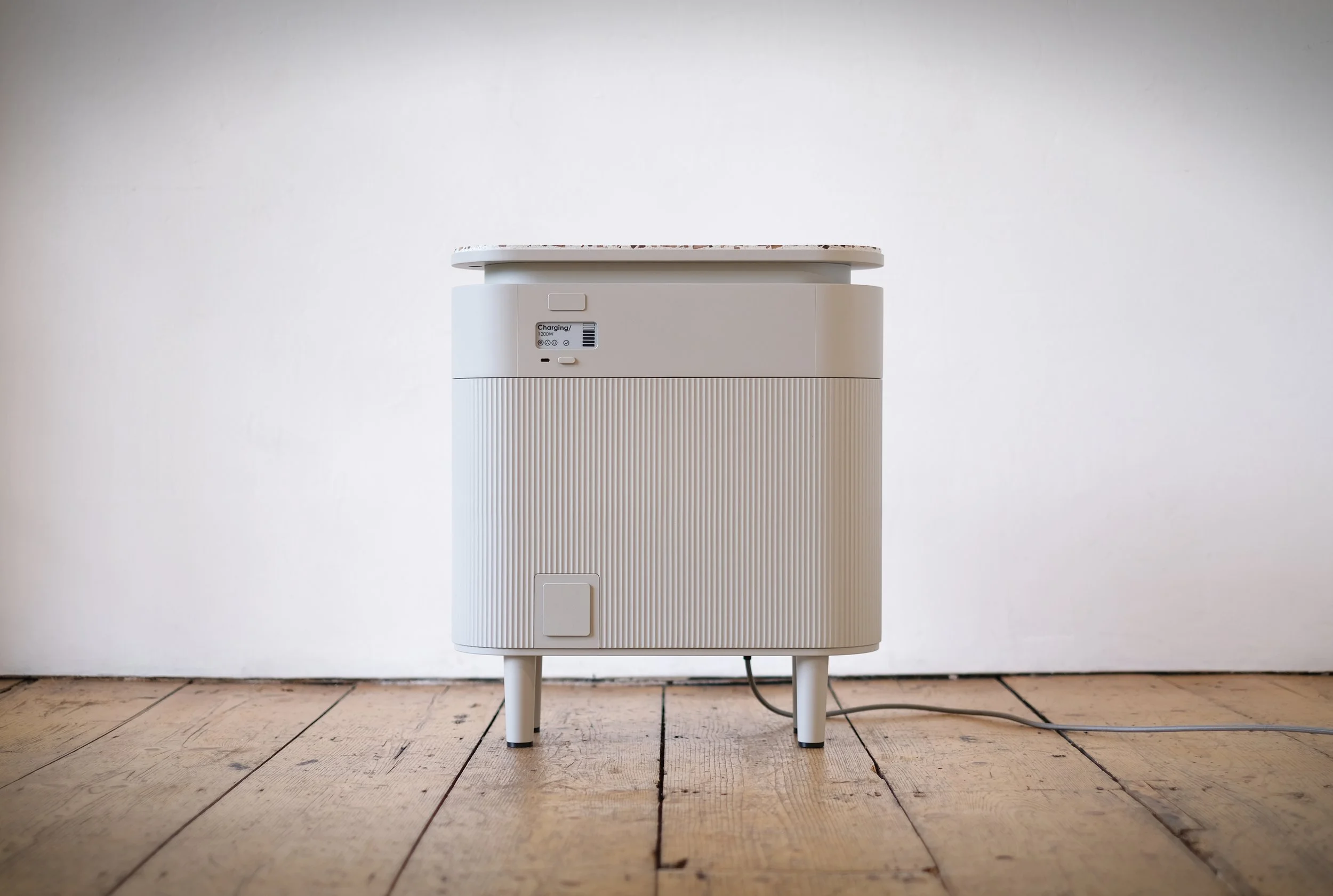
The Windfall Battery
The Windfall Battery is different because it doesn’t need anything else in order to work. Inside the box is energy storage, an inverter, and all the necessary components that allow you to simply plug it into a regular socket in your home.
Equally important is the software - simple plug-and-play physical setup of the product is mirrored by the digital experience. With the Windfall Battery you just tell it what time-of-use electricity tariff you’re on and then it will automatically optimise itself to save you money on your bills.
In the coming years we’re going to see more and more products like these hitting the market. There will be different types for different homes and different people. Many will be advanced systems aimed at the energy experts, but the Windfall Battery is designed to be easy to set up, and easy to integrate with the energy system, so that anyone can get the benefits.
The Lidl battery has its place, but in a world of over-simplified media and the offer of quick fixes, make sure you understand what you’re buying and what it’ll do for you before parting with your cash.
