

Why does a battery company care about plug-in solar?
The UK government has just announced some exciting news that means millions more homes in the UK will be able to benefit from home energy tech and reduce their bills, and their carbon emissions.
Recent geopolitical events have highlighted the challenges of energy affordability and our dependence on fossil fuels. Talking on the BBC yesterday, Ed Miliband set out the need to develop “home-grown clean power that we control”. A key part of that is giving consumers more access to clean energy products - one way to do that is by opening up plug-in solar.
What is plug-in solar?
Traditional solar panel systems typically require complex and expensive professional installation processes or planning permission. If you add a battery to your system then the costs can easily reach £10,000 and more. For these reasons, they’re most likely to be found on big rural and suburban homes.
Plug-in solar on the other hand is a lot simpler. Also known as "balcony solar", or “Balkonkraftwerk” in Germany where it’s taken off in a big way in the last few years, this involves small-scale solar panel systems that can be easily installed and connected via a standard wall outlet. They typically consist of one or two solar panels, an inverter, and a mounting system, making them easy to set up and use even if you live in a flat.
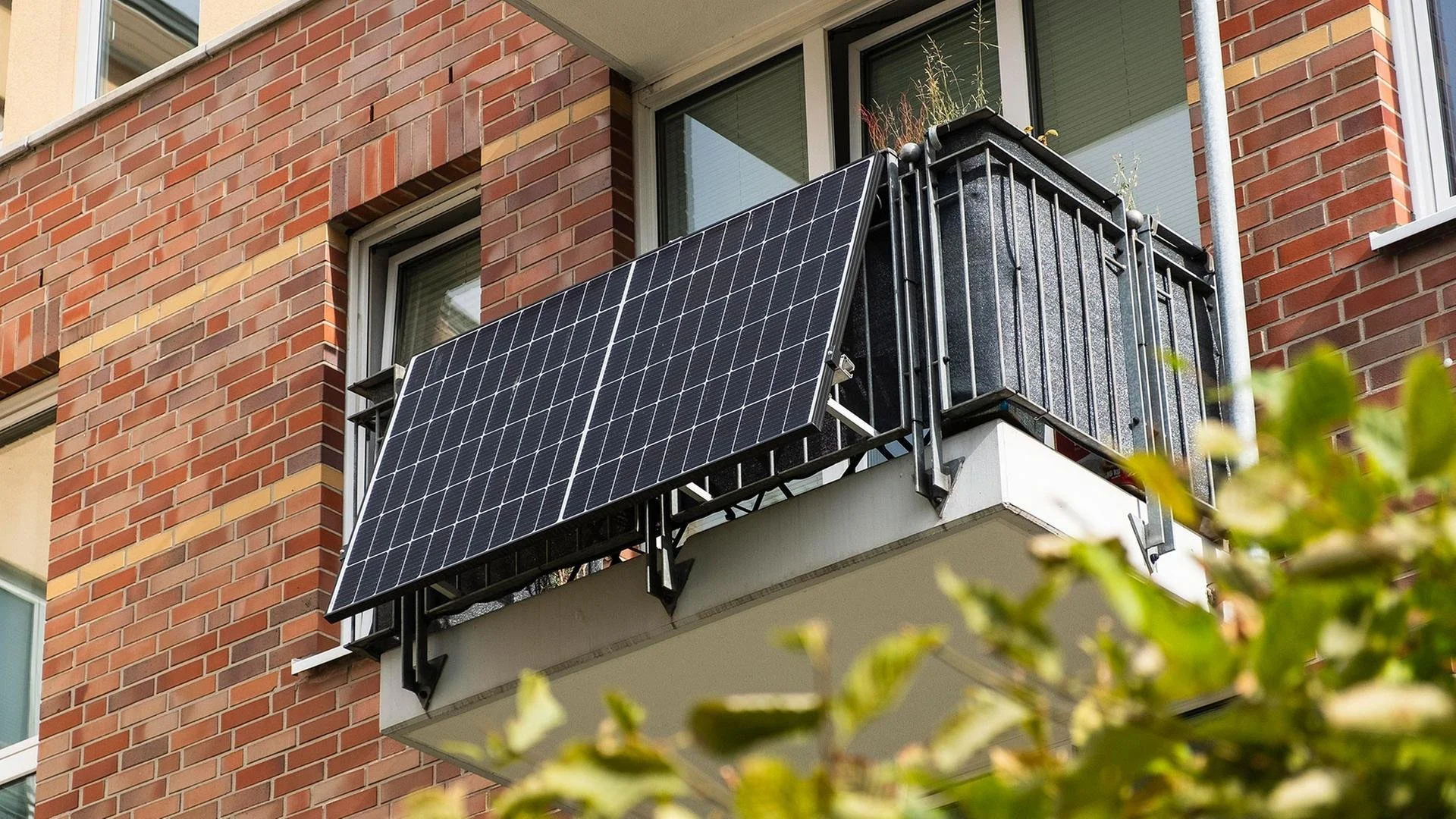
A balcony solar system
Without needing to be installed by an electrician, plug-in solar works by feeding power from a regular socket into your home's wiring. Then because electricity takes the path of least resistance, it flows straight to whatever appliances are running. If your panel is generating 200W while your home is using 200W, your meter sees a net use of zero and you’re being charged nothing.
People have been doing this successfully in Germany and across Europe for some years now. Systems can be as cheap as a few hundred euros, rather than the many thousands it costs for larger home energy setups.
Limitations of plug-in solar
Plug-in solar will also be a great option for UK consumers, but it doesn’t work for everyone.
Firstly, if you live in a flat, you need an appropriate balcony - facing in the right direction and upon which you have permission to add solar panels. In many places, this is restricted by local rules or conditions of leaseholds.
The limitations of space available on a balcony also mean that in practice, although any solar-generated electricity is ‘free’, it will be limited by the angle of the panels or by any shaded areas during different parts of the day.
And then, like any solar installation, timing of energy generation and consumption is key. At midday, you might generate 200W but only need 100W for your "baseload" (things like your WIFI router and fridge that are on all the time), meaning half that energy isn’t needed, and can end up being sent back to the grid for free. Conversely, by the time you're cooking dinner and using 2,000W, there’ll be less sun around.
One way to get more from a solar installation is to add a battery to capture that solar generation during the day so you can use the energy during the evening peak.
But we think there’s an even better way.
Batteries
Instead of getting small plug-in solar panels set up on your balcony, it can make more sense to just get a battery.
If you’re looking into plug-in solar though, you’ll probably think existing home batteries aren’t for you, and you’d be right.
Most home batteries marketed now in the UK are aimed at those large houses we mentioned previously, soaking up excess solar generated in the middle of the day. But only 5% of homes in the UK have solar panels, and even fewer have batteries.
If you think of home battery, you’ll probably picture a big white metal box installed in a garage. These home batteries work really well for large homes that have solar panels, but not for everyone else.
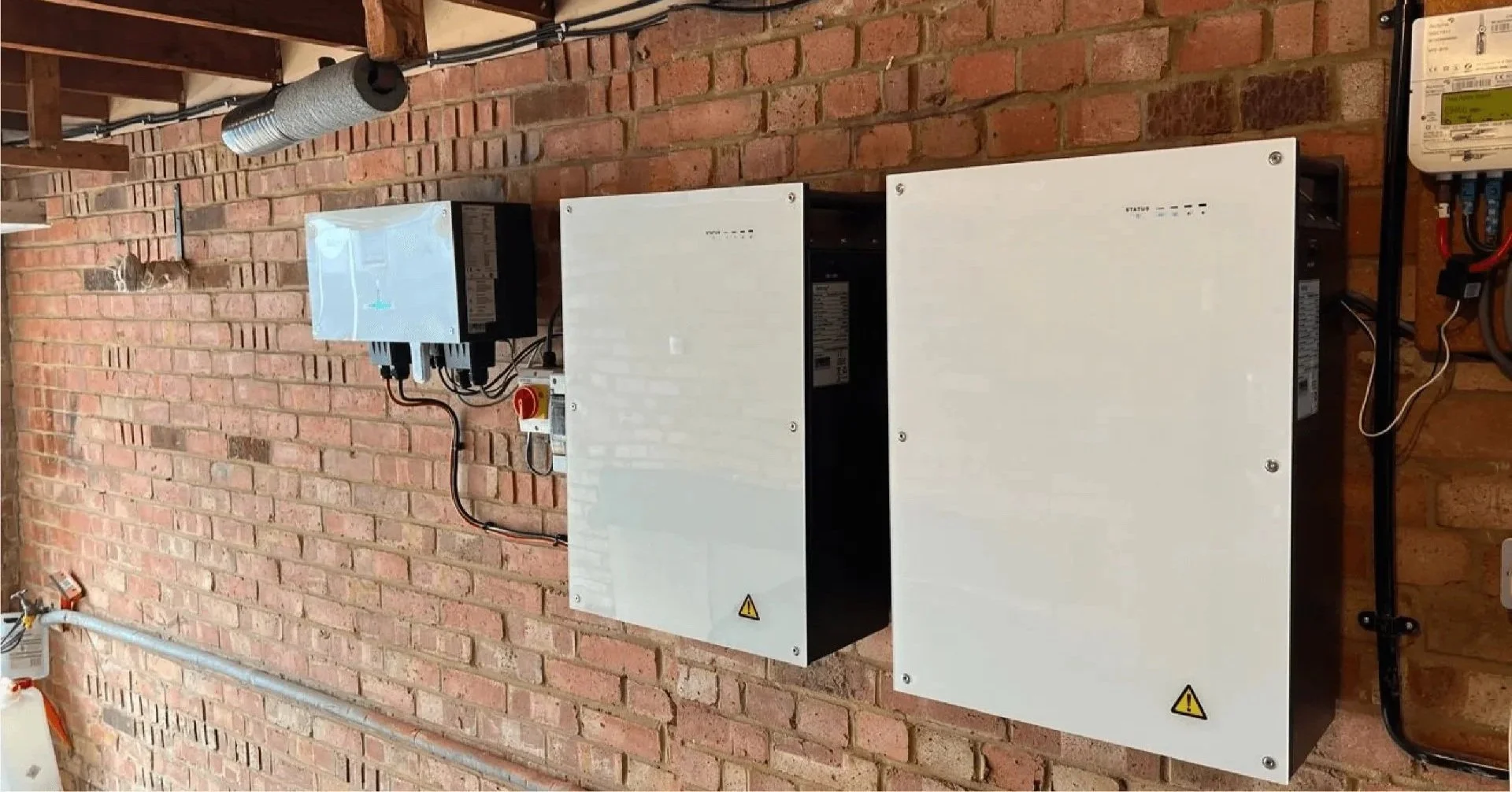
A typical home battery today
Plug-in batteries
So what if you took the best of what batteries have to offer, and the simplicity of plug-in solar?
Technically plug-in batteries are very similar to plug-in solar panels. Batteries and a solar panels can both be seen as DC power sources connected to inverters that turn the DC power into AC power that your home can use. In fact, balcony solar installations in places like Germany often include a battery.
In the same way the promotion of plug-in solar reduces complexity and cost of installation compared with what has gone before, the same benefits can be applied to plug-in batteries.
This opens up home energy storage for millions of homes in the UK.
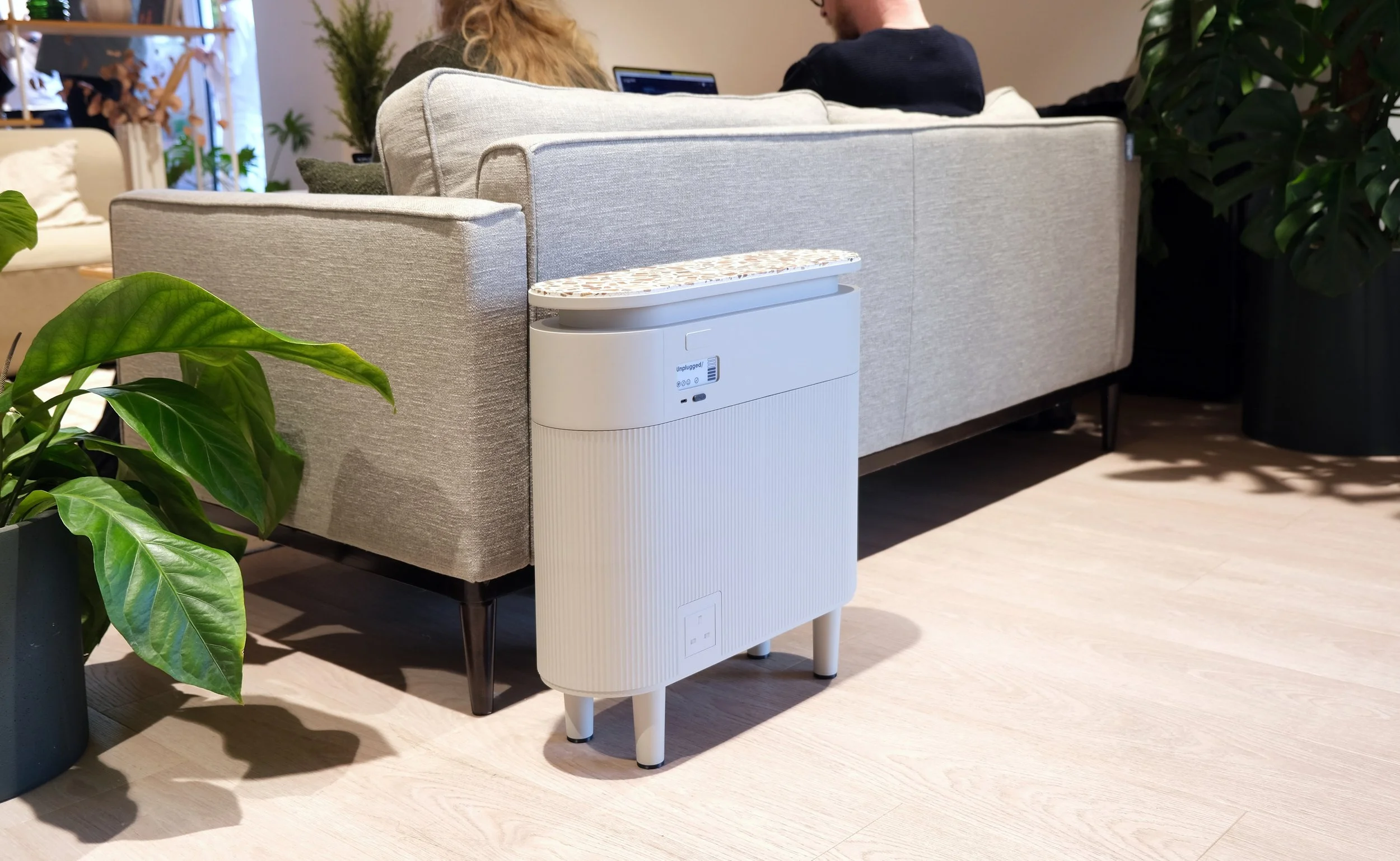
A Windfall Battery - plug-in battery
Value for money
People install solar panels because they want to capture free energy from the sun. It’s a compelling proposition, but as we’ve seen above, the money-savings aren’t always that exciting.
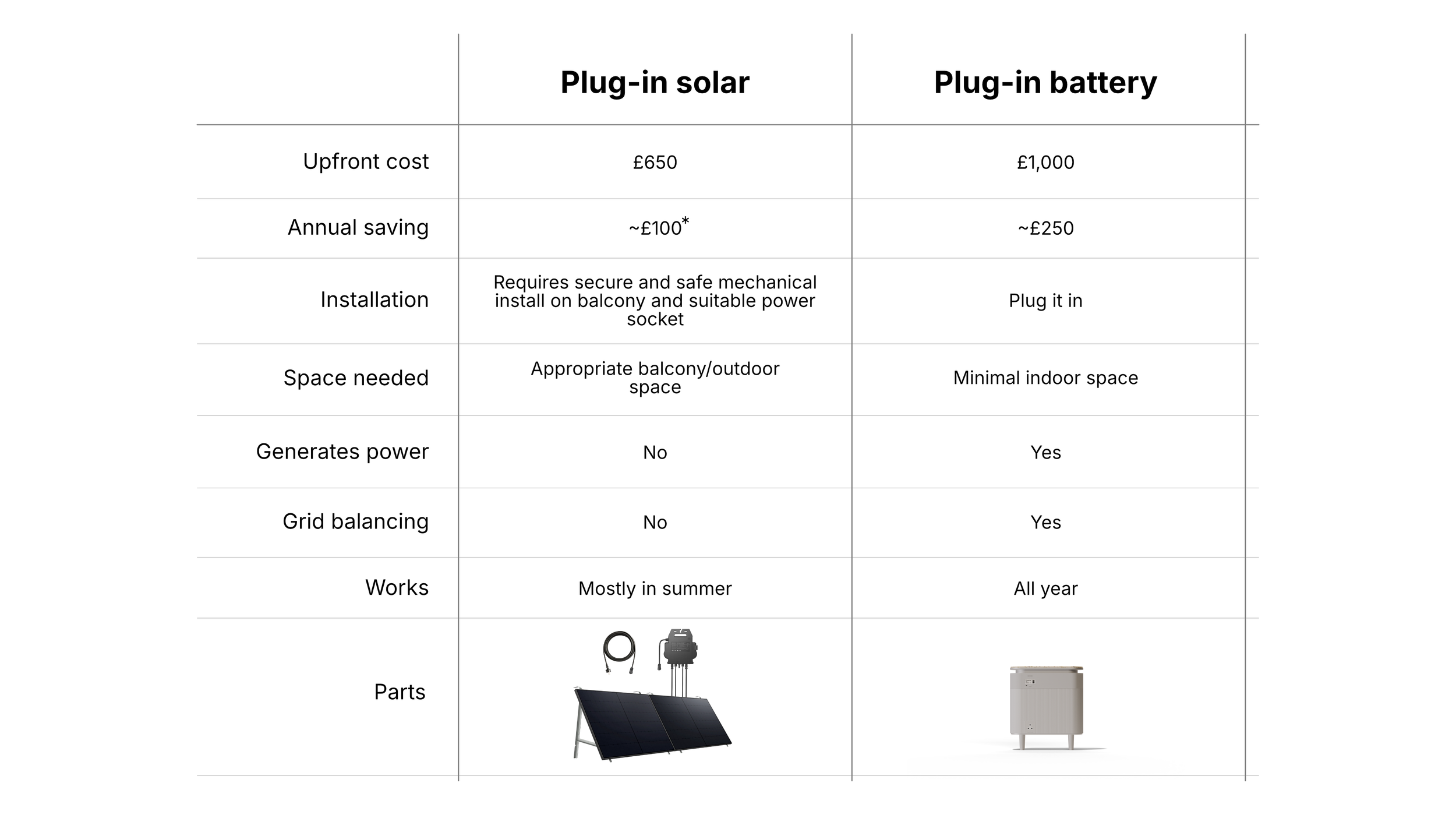
It’s a bit counterintuitive, but a standalone plug-in battery without solar panels can actually save you more money than getting solar panels.
A battery can make the most of clean, cheap energy whenever it’s available anywhere on the grid and not be dependent on solar panels on your balcony. It does this by charging up at those optimum off-peak times when renewables are most abundant, and then putting that energy back into your home during peak hours.
Although a bit more expensive initially than simple solar panels, a battery can save you more money, more quickly. It also works equally well all year round.
Another key advantage is that anyone can get one. You don’t need to own a big home or have an unshaded balcony. All you have to do is get a battery and plug it in.
Want one?
If plug-in batteries sound interesting, here at Windfall Energy we’ve been working on exactly that. And what’s more, the first Windfall Batteries are now available for pre-order.
You can learn more about the limited pre-orders below, and if you have any questions feel free to get in touch.
* Based on 800W solar system generating 2.6 sun hours a day over the year. 0.8kW x 365 x £0.26 (unit electricity price) = £197. That’s in perfect conditions though. Realistically it would be more like £100.